Tuesday, October 4, 2011

Pardon My Temper Tantrum

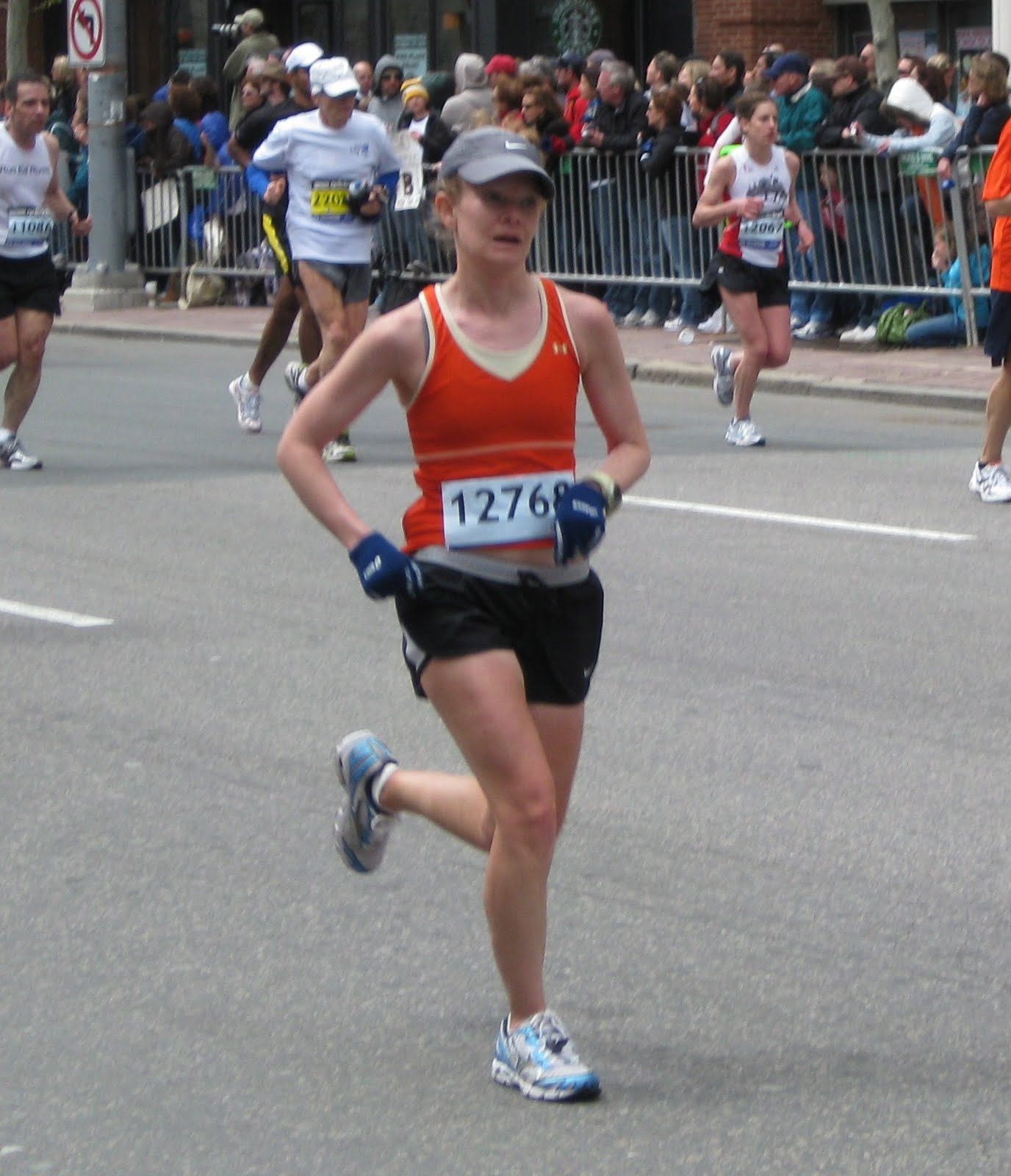
A pro runner once advised me to never open an old training log while I’m injured—especially one that describes a time when I was in the shape of my life. I don’t use training logs, but I have more than three years worth of emails and training schedules swapped with my running coach and because I apparently can’t resist self-torture, I opened up one of those emails from exactly one year ago this week.

It was seven days before the 2010 Chicago Marathon. Words jumped off the screen at me, as he reflected on the nearly flawless training cycle that brought me to that point. How much “fun” it was. How I “nailed” every workout. How I’d been so “tough.”

Seems like that was a different person, running through a different lifetime. I haven’t received an email like that since. Oh, how the mighty have fallen. Hard.

So, to celebrate the anniversary of such a splendid message, I cried at the kitchen table for a couple of hours while hovering over the cancellation button for my next marathon, in Houston. The truth is, a year ago was the last time I felt any confidence in my running—and probably not coincidentally, the last time I updated this blog. To push through one more attempt at being my best and falling short doesn’t seem like a viable option right now. I’m spent, in every sense of the word.

See, in that year, I’ve spent hundreds of hours and thousands of dollars in bills not covered by my insurance trying to figure out why it feels like somebody is stabbing me in my left hip and pelvis every time I run (or cough, or sneeze, or sit too long, or stand too long…you get the point). I’ve endured excruciating treatments that left me with deep purple bruises on a weekly basis. I’ve undergone x-rays and MRIs that yielded no answers. I’ve been examined by doctors who take guesses at what is causing the pain, but can’t say for sure. I’ve been told to cross train, then to not cross train…that it’s safe to run through it, then to stop running completely. To strength train, to not strength train. Stretch, don’t stretch. Do core work, then don’t.

And now I’m done. I’m done putting on a happy face. I’m done with the positive attitude. I’m done handling this privately, maturely, or rationally. I’m done being hopeful that this will turn itself around. I’m done trying to do everything I can to find solutions. I don’t want anybody’s pity or to be told that there are worse problems in life to have or that I’m not the first runner to have a tricky injury that takes a long time to heal. I know that. I don’t need to be told any of it—and although I realize it all comes from a good place, with the best intentions, from wonderful people who are only trying to be supportive, none of it makes me feel less miserable. Grateful that anybody cares? Truly beyond grateful. But not any less angry, sad, or frustrated.

I know that running isn’t everything. My self worth certainly isn’t dependent on a great workout or a best time. But when running—and every other form of activity—is suddenly ripped away, it becomes abundantly clear that it isn’t merely a sport or a hobby, it’s actually a lifestyle. My body and mind crave the hard efforts, the exhaustion they produce, the endorphins they provide. A simple training schedule sent each Sunday provides a natural rhythm to life that’s difficult to replicate when it stops appearing altogether. I still put on workout clothes when I wake up each morning, fully aware that there are exactly zero forms of exercise that don’t require the use of muscles in my lower left quadrant.

So what’s the point of writing a whiny blog entry oozing nothing but a lot of anger and self-pity? Maybe there is no point. But I sure hope a year from now I find myself at the kitchen table reading it and laughing, realizing how far I’ve come on the long road back to good health.


Share/Save/Bookmark

Saturday, October 16, 2010

10/10/10: Hot. Or Not.

Today I made it down the stairs without looking like a nursing home escapee who forgot her walker, which is a step up from yesterday, when it took approximately 20 minutes to make it from my bed to the coffeemaker. My nose is an alarming shade of red, compliments of what I believe to be the worst head cold known to man. My knee? It’s sporting the kind of scrapes it hasn’t seen since the playground days, though they are camouflaged by a layer of purple bruises—because my dog turned an evening walk into a distressing game of tug-of-war, which, in my weakened state, I clearly lost.

Yesterday I noticed the second toe on my left foot is black. I have no idea why.

But what I do know is what happens to all those people who actually finish marathons as fast as they possibly can. Here I am, five days removed from the 2010 Chicago Marathon, and frankly I still want my mommy.

Truth be told, it’s the kind of bodily damage I had secretly always wondered if I’d achieve. I wanted the aftermath of a marathon to tell me this story—that’d I’d done absolutely all I could do out there, that every ounce of months of training was put to good use, that the endless time and energy my coach generously gave me was not wasted.

Mission accomplished. When I finished the race in 3:19:22, with the temperature in downtown Chicago closing in on 85 degrees, my head, feet, legs, and arms throbbed. I’m almost certain my hair, eyelashes, and teeth hurt. My first reaction was pure joy with a new best time, in less-than-ideal conditions. My second was pure panic that I’d never make it back to the hotel—a two-mile walk that may have taken me longer to complete than the 26.2 miles that came before it.

In the midst of all the physical pain, though, is a lot of happy bewilderment. I started running marathons ten years ago this fall—I completed the 2000 New York City Marathon almost exactly one hour slower than the 2010 Chicago Marathon. Ten years. One hour. I look at the finish line photo of that younger, slightly bigger, cotton-shirt-wearing version of myself and want to tell her that she didn’t just check a to-do off of some life list, that because of this sport she’ll make friends with amazing people, visit places she’d otherwise never see, learn how to deal with triumphs and disappointments with equal grace, teach kids how to lead healthy lives, and discover that most limitations in life are completely self-imposed. I also want to give her some friendly fashion advice, but I’ll save that for another time.

Prior to 10/10/10 there was a sneaky part of my brain I didn’t know about that let the rest of me off the hook when the going got tough. I’ve crossed many, many finish lines with new best times, but with a gnawing intuition that I could’ve gone faster, not really knowing why I didn’t. I felt it coming on as it got hotter and hotter throughout Sunday’s race. There were many valid reasons to cut myself some slack—or even consider not finishing, saving my hard-earned fitness for a better day—and nobody would’ve thought less of me.

But as the doubts crept in, I knew enough this time to replace them with other thoughts. I mostly had flashbacks to early morning track workouts at 7,000 feet in the weeks before the race, following my coach, Mike, around and around that damn oval despite the hurt—his way of showing me the paces I am capable of, which I otherwise wouldn’t believe. I remembered the text he sent me as I headed to the starting line that morning—something he’s had to tell me more than once in two years: “You can do more than you think you can. Don’t underestimate yourself out there.”

And so, for the final four miles, when I considered slowing to a walk several times, I repeated it in my sloppy, increasingly sweaty, sun-burned head. “You can do more than you think you can. You can do more than you think you can. You can do more than you think you can.”

Mike’s words and his confidence got me all the way to the finish, though as soon as I stopped and wobbled toward the Gatorade, the dam I had built to temporarily hold all those doubts back, broke—and they flooded my head. I was convinced I was not the kind of runner who could drop eight minutes under a hot Chicago sun, as everybody around me legitimately grumbled and cried about terrible races and many more sought wheel chairs to the medical tent. So I stumbled toward my bag, grabbed my phone, and called Mike to confirm what the time on my watch was telling me. I can only hope it made him laugh.


Post-race milkshakes with friends. It's what's for dinner.


I know my body will soon heal and catch up with my mind and my spirit, which have already moved on to dreaming about new possibilities, cautiously optimistic that one day I will pick a race that defies global warming. For now, however, I’m taking refuge on the couch, grateful for a successful weekend made so much sweeter by the time spent with some of my favorite people, the love, support, and encouragement sent by family and friends, and the knowledge that no matter how annoying it might seem, my coach is almost always right. I can do more than I think I can.

Now, who wants to walk my dog for me this week?
Share/Save/Bookmark

Tuesday, September 14, 2010

Boston, the Conclusion: Peace and Pink Tutus


Ok, so the Boston Marathon was five months ago. In five months time a gal can see 26.2 miles in about ten gazillion different ways. Perspective changes, goes away, comes back, and changes again. This story has been altered, many, many times.

I remember the first thought I had, immediately after crossing the finish line and maybe that’s the tale I should tell. Whatever my initial impressions are—for better or worse—the first person to hear them is always my trusty coach, who oh-so-patiently endures a gamut of emotions before and after a race. When I finally qualified for Boston, at the Philly Marathon back in 2008, with an 11-minute personal best time to boot, I blurted out, “Mike, I thought I’d be faster.” I could feel his eyes rolling through the phone and I’m pretty sure I should be grateful for the 2,500 miles that separated us back then. This time, my first reaction was, “Mike! That was the most fun I’ve ever had running a marathon!”

(Editor’s Note: In the interest of full disclosure, I later questioned…more than once… “Mike, why didn’t I run faster?” The first step is recognizing the problem, right?)

Given the events of the year prior, I didn’t allow myself to ever fully believe I was running the race, until I found myself in the starting corral. Then I wondered how, exactly, I ended up there. The road to Boston was not direct, as I’ve alluded to before. It went through New York, Chicago, Philadelphia, Washington, DC, back to Philadelphia, spent some time in Saylorsburg, and eventually found its way to Flagstaff, AZ, in the dead of the worst winter the town has seen in decades, apparently. I never realized I had the tenacity to keep a dream alive through all of that. But I do, and that’s good to know.

And so there I was, at the start of the 114th Boston Marathon, with my new Flagstaff friend, Anna, by my side. Smiles all around, until out of the corner of my eye I saw a flash of pink. There he was. Again. Pink Tutu Man.

Pink Tutu Man is a middle-aged bald guy who sports a pink tutu, pink racing singlet, and carries a pink magic wand. He’s everywhere on the road racing circuit and I’m 99 percent certain I’ve found myself staring him down at every race I’ve entered in the past five years. While we’re roughly the same pace, the dude always beats me. And he’s not nice about it. At all. As he passes his nearby competitors, he taunts along the way, “HA! Look at you! You’re getting beat by a guy in a pink tutu!”

Seriously. Do you know what it’s like to be defeated—multiple times—by a man dressed like that?

But this was my Boston Marathon and I refused to let the man in pink steal my fun or my pace. If I’ve learned nothing else over the years, it’s to run my own race. One day my own race will end sooner than Pink Tutu Man’s.

I’m not sure what else I can say about the experience of the Boston Marathon that hasn’t already been said. It lives up to the hype, the history, and contrary to what some people say these days, it lives up to the prestige. I’d earned my spot there and there’s something magical about running against a group of people who did the same. There is respect for the distance and the race in Boston, not just from the athletes, but from the millions of people who support it as volunteers and line the course, screaming for hours on Marathon Monday. The atmosphere is extraordinary and at times, just gave me chills.

And so instead of paying too much attention to the clock or to any other costumed runners in our midst, I found myself just thoroughly enjoying the experience—a departure from any other race I’ve finished. I couldn’t help myself from actually having fun and soaking it all in. Maybe it was the oxygen-rich air (sea level might be my new favorite thing in the world), but I was happy. For the first time since I picked up my life and moved it across the country, I was running free. For exactly three hours and 27 minutes I wasn’t the new girl in town any more. I didn’t have to introduce myself to anybody or wonder if I would ever make new friends. I didn’t have to put on a happy face or feel awkward at yet another social event where I didn’t know anybody. I didn’t have to muster courage or fight fear that I’d never fit in. I didn’t have to worry about saying the wrong thing. All I had to do was run and it felt like pure peace.

I don’t know how it happened, but I’ve been at this marathon game for ten years. I now see that each race is its own chapter. I look back on my first marathon and recall some of the most exciting, friendship-and-adventure-filled, 20something, wide-eyed New York City years of my life. The Marine Corps Marathon conjures memories of turning 30, moving to Washington, DC, and starting a new job all within seven days. The Philadelphia Marathon (Part Two) came while I was wondering where to go next and knowing that temporarily living on a lake in the middle of nowhere was the best answer for the time being.


And then came Boston, when running was the one thing I could turn to during the most difficult transition of my life. The training itself was far from perfect, but the act of moving forward every day saved me from homesickness, self doubt, loneliness, and the darkness of a seemingly never-ending winter. Without it, I’m pretty sure the U-Haul would’ve done a quick u-turn back to the East Coast.

As I turned that corner onto Boylston, the finish line finally in view, it represented so much more than just the end of another race. In many ways, it marked a beginning. I crossed the line a few seconds behind Anna, but three minutes faster than ever before, feeling more like the confident, comfortable gal I’d like to believe I really am.

“Congratulations,” a fellow runner said, lingering near the fabled finish.

“Thanks,” I said, as I turned to see a bald middle-aged man in a pink tutu.

“You’re toast at Chicago,” I thought, heading to my phone, eager to once again share my first impressions and start writing the next chapter.
Share/Save/Bookmark

Sunday, May 2, 2010

Boston 2010 (Part I): Mind over Matter


I was the slowest girl. Always. And it never bothered me. At all.

I had shelves lined with spirit awards and participant certificates, while the majority of my friends had blue ribbons, first-place medals, records, and state titles. The one trophy I managed to bring home is still proudly on display in my childhood bedroom back in Hershey: a hard-fought seventh-place finish at a middle school Thanksgiving cross country invitational. I imagine most of the kids in Central Pennsylvania were enjoying a plate of turkey and mashed potatoes that day, but I couldn’t have been more thrilled.

Sports were never going to be my ticket to college, but it wasn’t for lack of hard work and dedication. By the time I headed off to Penn State, I had fourteen years of (year-round) competitive swimming and seven years of cross country under my belt, but not enough talent to continue in either sport. I took the usual array of deep friendships, lessons, values, work ethic, and memories that kids carry with them for the rest of their lives and, quite honestly, couldn’t have asked for greater gifts than those.

What I lacked throughout those years, besides the sheer strength and body mass most children my age were developing, was the ability to move beyond expectations. I didn’t have that instinct to believe that I could do any better than what the people around me thought I could do. I was expected to win essay contests. So I did. Lots of them. I was told early on that math wasn’t my strength, so I was happy with B’s. Besides an early knack for skiing, when it came to athletics, I was small and slow. And so I always believed I was, well, small and slow. And that was okay.

While I had a competitive streak inside me, it wasn’t often ignited in the most traditional fashion. My coach screaming from the pool deck did little to make me move any faster, but when my biology teacher promised a scoop of ice cream at lunch if I finished in the top three in the 500 freestyle, I came in a surprise second-place at the meet that night, beating a couple of stunned teammates.

I took that pre-existing condition into adulthood, as I eased my way back into jogging regularly. When I moved to New York and did my first road race—the Gridiron 5K on Super Bowl Sunday—I was content to hit 10-minute miles. The 5Ks turned into 10Ks, which turned into my first half marathon, which turned into my first New York City Marathon.

It was the encouragement of good friends, who promised blueberry pancakes after every finish line (noticing a trend here?), that kept me climbing the ladder…at a steady 10-minute-mile pace. It never occurred to me that I could run any faster than that, no matter what the distance. In my mind, I was still small and slow. Any finish time was a good one and a reason to be proud—besides, the New York City lifestyle wasn’t doing my not-as-small physique any favors.

For the next few years I happily marked fall by completing another 26.2 miles. I finished all of them in 4:17. I get points for consistency. During that time, I’d hear friends discussing loftier goals, like qualifying for the Boston Marathon. I never even dared to dream of breaking four hours. The thought of running a 3:40 qualifying time wasn’t even a fleeting notion. I knew my limit and 4:17 was it.

But the more I ran and the more friends of varying abilities I collected along the way, the more running became less of a hobby and more of a lifestyle. It evolved from an interest to more of a passion. Suddenly the determination I had always brought to excelling in other aspects of life, like my career, was trickling into my training. As I ran with the 10-minute pace group, I eyed the 9:30s. When that became too easy, I joined the 9s.

Confidence grew as I immersed myself in training and because of the help, advice, and encouragement of many more people than I could possibly name. Along with it, my running ability evolved. One day I realized that the people I routinely completed long runs with were setting (and achieving) goals like qualifying for the Boston Marathon. Making their goal my own didn’t seem like a silly consideration anymore. I just had no idea what awaited me on the road to Hopkinton.

It would be years. I would live in three different states. I would start new jobs. I would quit them. Extraordinary people would believe in me. Other people would discourage me. I’d have my heart broken. It would mend. I’d celebrate huge breakthroughs. Then I’d get hurt. I’d get better. I'd learn how to take care of myself. I’d be challenged by a new coach to do things I would have once written off as absurd and beyond me.

My life would look completely different than it did that day I finally mustered up the courage to say out loud, “I want to qualify for the Boston Marathon.”

But not once would I ever think of myself as small and slow again.

(To be continued.)
Share/Save/Bookmark

Monday, March 1, 2010

Thon On

I had my running gear on late last Sunday morning, but there I sat in my family room staring out the window at what is an all-too familiar scene in Flagstaff. Snow. Wind. Cold. And a hill workout ahead of me.

I couldn’t push myself out the door, wasting lots of time on Facebook, returning e-mails that could’ve waited, watching the cable television I decided to install for the first time in my adult life (for the record, I’m not yet convinced it’s a wise investment…), lamenting the departure of a BFF who had been visiting from L.A. for the weekend…generally wallowing in lethargy, feeling less than enthusiastic about running and life in general.

I was in search of inspiration and in a very shameless, 2010 way of dealing with such a quandary, I posted my quest for motivation on my status update. Desperate times, friends, desperate times.

Then a very un-Facebook thing happened. It served a purpose. My friends came through— real ones, like people I can communicate with regularly without typing on any electronic devices (as it turns out, my phone has a nifty function that allows for voice transmission, which facilitates a custom from days of yore called a conversation. Who knew?).

A couple of these for-real friends simply posted a link and told me to click on it. I followed their directions. I wasn’t disappointed.

In front of me, a live feed from Penn State’s Bryce Jordan Center, where thousands of students, alumni, kids, and their families come together each February for the weekend-long Penn State Dance Marathon, affectionately known to most of us as Thon. And while the no sleeping, no sitting, two-day dance party is the main event, it is really the culmination of a year-long fund-raising effort by Penn State students that benefits the Four Diamonds Fund, which supports families battling pediatric cancer at the Penn State Hershey Medical Center.

It is the largest student-run philanthropy in the nation. Since 1973, it’s raised almost $70 million--$7.8 million this year alone (yes, $7.8 million during a recession. Take a moment to let that sink in…). It involves 15,000 student volunteers, 700 dancers, and an experience I am still unable to adequately put into words.


This was one of the first Thon weekends I’ve missed—a byproduct of my grand experiment of living 2,500 miles away. But I tuned into that live feed just as “Family Hour” was beginning, when the children receiving cancer treatment and their families stand before the tens of thousands of students, many of whom have been on their feet for more than 40 hours, to say the most heartfelt, emotional, meaningful “thank you” you’ll ever hear. Ever. If you’re left untouched or unmoved, I promise that you do not possess a heart.

A boy took the microphone and declared to the packed house in front of him that he didn’t come to talk about his cancer, or really any of the “bad stuff.” He preferred to talk about why he loved Thon and why he is grateful for all that is good in his life. Not more than 11 years old—most of which has been spent within the confines of a hospital, battling for his life—he could find more to be happy about and thankful for than most adults I know. Myself included.

In that moment, I started remembering where I came from, where I learned about the person I wanted to become, and what I wanted to do with my life. Being involved in Thon during such formative years was a little bit of magic. We found out, perhaps too early in life, what can happen when passionate, intelligent, energetic, dedicated, and downright fun people come together and pour themselves into every detail and logistic of a cause they wholeheartedly believe in. Every year a new group of students do as we once did: push themselves to make the effort more successful than the last, in order to make life better for people who need it. They find out along the way that when they look outside themselves—in big ways and small—not only are they making their little piece of the world a better place, but their own lives are happier and more fulfilled because of it.

It was a utopia (Thontopia?!), of course. Many of us often joke that it was a rude awakening when we were sprung from that bubble, hatched into the cruel realities of the “real world,” where so many obstacles get in the way of simply doing good. The basic lessons always stick though: do nice things for others, work hard, and be grateful. Not hard to do, but unfortunately far easy to forget in the rigors of everyday life.

I took a little personal inventory as Thon continued on my computer screen. I didn’t really enjoy what I saw, knowing that the past few months had largely been all about me: moving, shoveling, adjusting, getting sick, getting better, being injured, healing, good running, bad running, water damage, work stress. The list could go on, but only if I allowed it to. No wonder I felt lethargic—self pity takes a lot of energy.

So I headed outside for that hill workout in the snow and wind and cold, which at that point seemed largely inconsequential in the grand scheme. I thought about how my very first “marathon” had nothing to do with running, but it—and the kids—taught me how to stand, in so many ways, even when it seemed impossible. Thon gave me four words to live by—Four Diamonds—I continually recite in my head when the day seems long: courage, wisdom, honesty, and strength.

So, yeah. Inspiration and motivation? Apparently I have all I need to last a lifetime, if I only remember it’s there. Status update not required.
Share/Save/Bookmark

Saturday, December 26, 2009

It Takes Two. Really?


Dear Pottery Barn,

Greetings from my new home in Flagstaff, AZ. Yep, that’s me, gleefully crossing the border into Arizona, nearing my final destination after approximately 2,500 miles of driving with my good friend, Jeff. Thank goodness he volunteered to come along—I was all set to do it alone. That would’ve been a long haul.

Why Flagstaff? There are a few reasons, none of which are terribly earth shattering. It’s there, it’s beautiful, the people seem nice, and I think I can eventually make a happy life for myself for a while…or maybe forever. Who knows? But you see, Pottery Barn, I’ve gotten this question a lot. In my estimation, 93.4 percent of the time, it has been immediately followed in rapid-fire succession with: Is there a boyfriend there? Are you moving for a job?

The answer to both those queries is a definitive “no.” For the record, I make a decent living as a freelance writer, which I can do anywhere I please. And, sadly, most folks just don’t know what to do with that. Why the heck would a single lady move the whole way across the country to some mountain town, where she knows next to nobody, for no other reason than to give it a try?

Because I can and I want to. And if both those things are true, then I don’t see any rational reason to wait until there’s a man or a job or a ready-made group of friends to legitimize the decision. I could either spend the rest of my life on the East Coast wondering what it would be like to live out west, or I could live out west and find out. Doesn’t seem like rocket science to me.

I’m not a bitter woman. I haven’t watched too many episodes of Sex and the City. OK, that’s probably a lie. I have, but I promise I’m not jaded. I’ve had good relationships, none of which turned out to be Prince Charming. Maybe he’s out there. But I’m not going to sit around waiting for him to show up so I can get on with the rest of my life. I’d miss out on a lot of fun if I did.

As such, I’ve learned to do all sorts of things myself. All by myself. Like, I figured out which new SUV to buy, then I hitched a U-Haul trailer to it. With my own two hands. I drove it home and backed it into a garage. Have you ever backed a trailer into a garage—or even just a parking space—Pottery Barn? It’s not easy. I loaded that trailer up with furniture and boxes that weighed a lot more than I do. Alone. And when a blizzard dumped 2-feet of snow on Flagstaff within 48 hours of moving in, I shoveled it. Numerous times. I have forged on with my Boston Marathon training schedule, despite not making friends with the 7,000 new feet of altitude in my life. A few days after the blizzard, I completed my first long run, battling ice, snow, 30 MPH headwinds, and more than a couple of hills. I admit, I was dangerously close to tears during the first mile, wondering why I had willingly made my life so difficult in so many ways. It all seemed like it was finally too much to handle all by myself. But then I hit the halfway point, turned around, and felt the wind at my back. It would be OK. I even figured out how to install new toilet seats later that day, after I lugged a coffee table up a flight of stairs.

Here’s the thing, though, Pottery Barn. I was really excited when my new desk showed up, right on time, with your logo emblazoned on four boxes, each bigger than myself. UPS dropped them off on my driveway. I shoved them into my garage and let them sit there for a few days, trying to decide how, exactly, I’d be able to get that new desk into my new house. Had I reached the final stop on my lifelong independent streak? I thought I had. Those boxes weren’t just big, they were also really heavy. And, honestly, I’ve started feeling a little exhausted.

Then one night, I mustered the energy and I spent the better part of the evening wrestling everything out of the boxes and into my new office. A few new bumps and bruises later, I was almost finished. Until the directions you included slipped out of the last box. And there it was: “It takes TWO to assemble this furniture,” the piece of paper declared, followed by a nice graphic of a couple of folks putting my desk together.

I wondered who that other person was in the picture. Maybe it was somebody I hadn’t met yet. My new best friend? The man of my dreams? A friendly neighbor? The possibilities were endless, but the truth remained: whoever that nice, helpful person was, he wasn’t going to show up that night…or maybe even in the next six months. Inspired to write my way to fame and fortune on that desk (or at least make enough to pay the rent), I hoisted the top of it to its rightful place and finished the job that I had started.

Please don’t misunderstand, Pottery Barn. I have the best friends and family a girl could ever ask for—they make it impossible to ever feel true loneliness. It’s just that 99 percent of them don’t happen to live within 3,000 miles of my house. But they send me endless love and support no matter where I go or what whacky thing I decide to try next. It’s precisely where my strength and courage comes from, of course.

Alas, this world is designed for two, Pottery Barn, and I know that it’s not your fault. I agree that when the stars align, life is usually more fun that way. Maybe one day I’ll be lucky enough to find that guy in the picture. He looks kind. And stronger than me. In the meantime, maybe you could include an addendum or disclaimer to those instructions, for those of us who find ourselves alone every now and then. It only takes one person to put that desk together. One with determination, a healthy sense of humor, and a certain amount of confidence that she’ll look back on this time in her life and know it is precisely when she was finally convinced, without a doubt, that she is capable of anything.

Thanks, Pottery Barn.
Sincerely,
Erin S.

Share/Save/Bookmark

Tuesday, December 8, 2009

Go West (Part V): Into Thin Air

“Too often…I would hear men boast of the miles covered that day, rarely of what they had seen.” –Louis L’Amour


I don’t think my eyes were capable of opening wide enough to take it all in. I had never seen anything so beautiful and foreboding all at the same time. Intimidating. Inviting. Awe-inspiring.

I wasn’t even 10 years old, in the back of a white rental car my father was driving somewhere toward Park City, UT, my face practically glued to the window.

“Dad, are we skiing on those mountains?!” I asked, not at all sure whether I wanted the answer to be yes or no.

His blue eyes smiled back at me in the rearview mirror.

“Yes, we are,” he said, matter-of-factly, with a hint of eagerness to share his love of the mountain west with his uninitiated daughter.

I had so many questions, yet had nothing to say. I just kept staring out that window, trying to comprehend how my skis—not even long enough to put on the roof rack—were going to get me down such steep, powder-covered slopes. My East Coast skills and sensibilities were clearly of no use here.

At the top of our first run, I stood close by my dad, the tips of those tiny skis hanging over the edge of the trail. We stood there in silence for a minute or two, surveying a landscape beneath us that was beyond anything my young self had ever imagined.

“Gorgeous, isn’t it? Take it all in. Appreciate it,” he said. “And don’t be afraid. You can do this.”

With his quiet confidence, and a gentle nudge, I was on my way.

***

Anybody could try to throw out a bunch of words to describe running on Waterline Road. But they’d just be a bunch of words. No meaning. No context. No emotion. No regard to what it really is: an experience; and my guess is that it can often be a personal one, depending on what kind of day you’re having.

We stood at the bottom of the trail on Friday morning, once again feeding off the enthusiasm of our coaches, who have probably logged hundreds of miles on the dirt road before us and still can’t stop raving about it. We’d climb to 9,000 or so feet, depending on how far each of us went. On a clear day, you can see the Painted Desert. The thick Aspen groves, the views of Flagstaff below, the steep, rocky cliffs dotted with huge Ponderosa pines…all of it encapsulated in a solitary morning ascent, twisting up the side of the mountain.


It was the only run all week that I found myself alone, with a few people so far ahead, I couldn’t keep them in view, and some who were far enough behind, that I never heard their chatter. I had it all to myself, this ridiculous scene. It was as if somebody was kind and generous enough to let me in on a big, special secret—the type that you feel honored to keep.

Maybe it was the ever-thinning air, but my mind felt free to wander all over the place that morning, opening up to all sorts of possibilities. My surroundings were daring me to make decisions and be brave. Stagnation was not an option. I had to keep moving forward, keep climbing as far as my body would allow, so I could see it all.

There are times when life’s options suddenly become clear—and it usually happens during those rare moments when the noise in your mind is quiet and all you can hear is what your heart is telling you. These are the moments that can’t be forced—you have to be lucky enough to recognize them and simply listen.

There was nothing about that week or that run up Waterline that felt comfortable to me. Perhaps the physical challenges wreaked some havoc with my perceptions, but nothing I experienced in those six days that made Flagstaff seem like home. Nonetheless, as I neared the end of the first half of that morning’s run, something told me quite clearly that I’d be back.


For many years there had been valid reasons to push away a dream and an instinct to move west. Those valid reasons were beginning to diminish—the one still weighing heavily though was a desire to stay close to my grandfather for as long as possible. What I didn’t know on that Friday morning was in just few weeks time, he would unexpectedly be gone.

I discovered that when all those reasons no longer exist, all that’s left are excuses. Most of those excuses just boil down to nothing but fear, anxiety, and insecurity. Moving by myself, far away from everything I know and everybody I love would be scary. Perhaps one of the most frightening things I’d ever do. Moving back to New York, where everybody and everything was comfortable and familiar, would be the easy choice. Somewhere deep down I knew that it was time to take a risk, make myself uncomfortable, and stop being afraid of making a mistake.

I turned around to head back down Waterline Road, to find Mike and Vince running up behind me.

“Keep looking left all the way down,” Mike urged, as they continued on. “Enjoy that view. Take it in.”

“And don’t be afraid,” I thought, as I started my descent. “You can do this.”

With a quiet confidence--and a few gentle nudges--I was on my way.

Share/Save/Bookmark

Thursday, November 12, 2009

Go West (Part IV): Pines and Peaks


“Traveling…forces you to trust strangers and to lose sight of all that familiar comfort of home and friends. You are constantly off balance. Nothing is yours except the essential things—air, sleep, dreams, the sea, the sky—all things tending toward the eternal, or what we imagine of it.” –Cesare Pavese

When I decided I would head to Flagstaff for the Run S.M.A.R.T. Project Retreat, I didn’t know anybody else who had committed to it—a departure for somebody who has spent a decade worth of summers on vacation with 20 best college friends, in a massive house, on a beach, with unlimited, familiar amounts of laughter and antics. Would I make friends? Will I die of an asthma attack (or sheer embarrassment) at 7,000 feet on some random trail in the woods? Will I be too slow? What if nobody wants to run with me?

For a split second, I had all the anxieties of my 8-year-old self going to my first sleep-away swim camp. I also remembered that even back then I always managed to find somebody to eat lunch with.

So I registered. It was early spring—my focus squarely on Boston, my fitness at its peak, my confidence soaring. The thought of spending a week in a place that seemed a little magical and mystical to me, exploring the trails where the fastest runners in the world train, and having the opportunity to share the experience with a group of new people sounded like a fine way to jolt me out of my routine.

It was pre-injury. Pre-Boston Marathon deferment. Pre-disappointment. Pre-aggravation with all-things running. The week before I headed west, my hamstring relapsed into a painful state and was trying desperately to drag my spirit down with it. Thankfully, my head is by far my strongest asset and my saving grace (except, of course, when it’s really not…). Besides, what’s a little leg pain when you’re preoccupied with gasping for limited amounts of oxygen anyway?

We walked into the Embassy Suites lobby and were warmly welcomed to Flagstaff by my coach, Mike, who has lived there for about three years. Any trepidation I was harboring by that point vanished—the mark of a great coach is often an infectious enthusiasm at just the right time, and I won the jackpot when I signed on with Mike more than a year ago. His love of Flagstaff, of running, of fun, and of people made it impossible to be anything but eager for what the week held. And the fact that e-mails, phone calls, and texts had been our sole sources of connection for so long made the time together there even more meaningful.


On our first early morning run in Buffalo Park, I got my chance to meet the peaks and the pines, looming in front of us as the group embarked on its first jaunt. Finally, I understood what all the Flagstaff fuss was about—I was completely distracted by the surroundings, the cool, fresh morning air, and the opportunity to run with others, after a year of training nearly 100 percent by myself.

It marked the beginning of a week’s worth of breathtaking morning runs that gave us just a small taste of the endless trails to explore. It was the kind of training that never required a watch to keep track of pace or mileage—the altitude giving permission to run easy, the beauty and the company giving reason to simply savor each moment. The early hours gave way to leisurely breakfasts, which eased into afternoon sessions with a few of the best and brightest in the sport, generously sharing their time and expertise in everything from nutrition and fueling to injury prevention, recovery, and the art and science behind fitness and performance. There was gait analysis and track drills, an afternoon dip in a cold Sedona creek, and a “recovery day” of hiking at the Grand Canyon.

It was part vacation, part running camp. There was a lot to learn, more to observe, plenty to absorb. Lessons learned? Yes, plenty. A few in unexpected places:

Lesson 1: Choose wisely. When you enter a university cafeteria for lunch, give yourself one extra minute to really think through your options. Be cautious. And never, ever consume a tuna fish sandwich.

Lesson 2: Live and learn. So, you opted for the tuna fish. Fine. Now you’ll be throwing it up (and much more) all night long. If the running and altitude haven’t already caused dehydration, your body is certainly thanking you now for pushing it right over the edge, and adding a gigantic calorie deficit and sleep deprivation to the mix. By 6 a.m., though, it’ll be time to put on a happy face and head to Sedona, where you’ll fake your way through a run, jump in a creek, and pose for a Runner’s World photo shoot, knowing full well that when that issue hits the newsstand in the spring, your only thought will be, “I’m never eating tuna again.”

Lesson 3: Be grateful. I was truly surrounded by some of the kindest people in the world that week, which I would’ve recognized under normal circumstances, however I obviously added an entirely new dimension to the experience. Does your coach bring you smoothies when you’re sick? Or take you to Starbucks as soon as you’re all better? Mine does. Do your friends stay in, eat ice cream (yep, finally had reason and opportunity to visit Dairy Queen), and watch bad reality television with you when you’re not feeling well? Mine do (thanks, KC!). I even dragged myself out of the Grand Canyon, fueled by nothing but a handful of dry Cheerios, an obscene amount of Gu2O, and the constant encouragement of two fantastic hiking buddies (thanks Sue and Everett!).


Lesson 4: Laugh it off. I mean, really, if you can get through a bout of food poisoning and still manage to have an absolutely amazing experience, you know it was worth the price of admission and much, much more. Run S.M.A.R.T. put together an extraordinary week, with just the right balance of work and play. And they were relentless in their effort of ensuring everybody was having fun. If I wasn’t laughing or smiling through most of it, I have to think it was my own fault (see Lesson 1).

Last, but certainly not least, Lesson 5: It should always be about more than running. My favorite part of this sport is the ways in which it enriches every other part of my life. Thus, the best parts of the week were when conversations turned from calorie counting, PRs, racing goals, and training gear, to something more substantial (like Death Cab for Cutie, for example ;)). With any luck at all, while running may have brought this and many other groups together, the reward is when we look around the dinner table each night and it doesn’t much matter who is gunning for Boston, or is a world champion duathlete, or an Olympic trials qualifier, or the “World’s Best Coach.” The joy isn’t in discovering who wants to break 3 hours in a marathon or has found the ultimate training shoe. It’s finding out that the woman at the end of the table is on her first vacation in 14 years, the guy sitting next to you was on life support five years ago, the man across the table once landed a plane in some random farmer’s field during a blizzard, and a few people who were once just acquaintances have evolved into cherished friends.


Clearly I learned a lot…about running, about myself, about making smart sandwich decisions, and about the people around me. What I didn’t know, however, was that I had one more discovery to make, on the most beautiful run yet.

(To be continued…)
Share/Save/Bookmark

Thursday, September 3, 2009

Go West (Part III): I Don't Like Your Girlfriend

“Travel at its truest is thus an ironic experience, and the best travelers…seem to be those able to hold two or three inconsistent ideas in their minds at the same time, or able to regard themselves as at once serious persons and clowns.” –Paul Fussell

What would you do if you could instantly have an hour of your life handed back to you? Would you treat it as a do-over, or simply go about your existence as if you didn’t just get 60 minutes added to it?

It’s difficult to say if that hour is truly adding anything valuable when you’re spending it within the confines of Page, AZ, save more time with good friends. Scenic? Yes. Odd? Extraordinarily (though maybe not as eccentric as Kanab, UT). Cultural mecca? Really, no. Dairy Queen? Of course not.

By crossing that Utah border into Arizona, there is yet a whole new time zone at your disposal. In that spirit, we were sure to stop by the local Safeway to stock up on a few bottles of wine, to be ceremoniously consumed in our three-bedroom apartment-style accommodations at Debbie’s Hideaway, across the street from Bashful Bob’s motel.

Perhaps there were red flags that I chose to ignore, like the fake flowers planted outside our door or the distinct feeling that I’d landed at grandma’s house, where odd collections of trinkets like Monopoly pieces and dusty old books are displayed in glass china cabinets in the family room. I rattled around our fully stocked kitchen and discovered that if we wanted to make Thanksgiving dinner, we were set. If we wanted to uncork a bottle of wine? Not so much.


At that moment, while KC and Alissa had retreated to their bedrooms to get ready for dinner, there was a knock on our door. Rick, the not-so-proud manager of Debbie’s Hideaway, was there to collect a credit card.

“You don’t happen to have a wine opener anywhere, do you?” I asked.

“You know, that’s the second time this week somebody needed one and I don’t have one,” Rick said. “But I did come up with a solution. I’ll be right back.”

I knew he wasn’t lying, because I was still in full possession of my credit card.

Rick came back with an electric drill, a pair of pliers, and a screw. He was right. He had a solution. To this day I still regret that I didn’t capture it on camera, but it suffices to say that we had two open bottles of vino ready and waiting, and nobody got hurt in the process. I’m also strongly considering packing power tools the next time I go on vacation.

I followed Rick over to his “office” (complete with metal-frame futon couch) to pay for our stay. Along the way I took the opportunity to ask if the sushi restaurant in town was good. And by “good,” I meant, “safe.” Consuming sushi in the desert seemed dubious to me.

“It is really good. And I’m a sushi snob,” he said. “I moved here from L.A.”

“Ah, so you share my concerns—the three of us are (mostly) from New York,” I responded. “How did you end up in Page from Los Angeles, anyway?”

“Did you see the motel down the block? Bashful Bob’s?” Rick said. “Bob is my dad.”

“Is he bashful?” I asked, naturally.

“Actually not at all, but he’s in his eighties and he needs help, so I moved here 13 months ago,” he said.

“So that must be a big adjustment. How do you like it?”

Rick looked at me earnestly and replied, “It’s awful. I haven’t had a date in 13 months. And it’s not like I can go around sleeping with all the guests.”

“Clearly,” I thought.

I made as graceful an exit as I could muster while Rick extended an invitation for the three of us to join him on the patio after dinner, where, he said, he and his buddy would likely be having a few beers.

So when we returned from dinner—Mexican, because the sushi joint was closed for a private party!—we tried to get into our room from the opposite side of the building. In our deliriousness, we were actually attempting to break into the wrong room. Oops. We hastily b-lined to the other door adjacent to the patio, fairly certain we went unnoticed.

I poured the wine. Into three coffee mugs. Already aware that there was no corkscrew in the kitchen, I’m not sure what part of my logic assumed there would be stemware.

We toasted to our week that was—all that we had seen, done, talked about, laughed at, and experienced. And after one mug of wine, it was time to get the party started. And by “party,” I mean “dance party.”


There was vintage Madonna, among other 80s faves, but then out of nowhere, iTunes kicked out Avril Lavigne. Funny how we’re all responsible for our own playlists, yet nobody claims the random guilty pleasure until it is too late. Music libraries—and the shuffle—never lie. Avril was passionately declaring, “Hey, you, I don’t like your girlfriend!” and for some reason it struck a nerve (really, ladies, who hasn’t felt that way at one time or another?!).

“I think you need to new one!” we sang, very badly, and very loudly, while laughing hysterically.

And then, another knock on the door, which froze us in our haphazard footsteps. We stared at each other for about 10 seconds. Then instantaneously ran to the back of one of the bedrooms, reminiscent of getting busted at a high school party, though we stopped short of escaping through the window. After about a minute of giggling uncontrollably we realized how ridiculous it was that three adult women were scared of getting in trouble. So we sent KC out to be the grown up. Alissa and I continued to hover in the back corner of the bedroom.

Guess who? Yep. Rick. Who, after about 2.5 mugs of wine, was officially being referred to as The Ricker. As long as we were dancing to 80s music, we thought we’d also pay some homage to Silver Spoons. And as you might imagine, we were so NOT getting busted. He “heard” that we were still up, so he extended that patio invitation one more time.

We took him up on it, topping off our mugs and heading out to the picnic table to join The Ricker and his buddy (whose name escapes me). After trading tales of our travels and hearing a little bit more local lore—apparently Bob’s, umm, exploits make him the complete opposite of bashful—Rick disclosed that he was a struggling actor in L.A. Not a shock. His claim to fame? Besides some disturbing, inappropriate photos of some Hollywood party gone horribly wrong, his big break came as a character on the television series Bablyon 5. I didn’t know what it was either, but I gather from the trading cards that The Ricker shared, it entailed playing some weird science-fiction creature and a lot of makeup.

If the trading cards weren’t enough of a hint, the nearly four mugs of wine and the prospect of the week-long running retreat in Flagstaff beginning the next day, made me come to the conclusion that it was time to call it a night. The Ricker was sad to say goodbye, of course. He took my hand, refused to let it go, kissed it, and declared, “You are so cute.”

Alissa couldn’t contain her laughter long enough to get us behind our closed door, as I just rolled my eyes and lamented, once again, that I have the unwelcomed ability to seemingly only attract the oddest, most desperate of men. On the upside, at least this one came with his very own trading card.

So, now we can see what can happen when you have 60 minutes handed back to you in a day.

Morning seemed to come way too fast, as it usually does following a bizarre, wine-infused late night. With an aching head and parched throat, I threw my belongings into the car and waited for my partners-in-crime to return from Starbucks so we could make a quick escape out of dodge.


After greasy breakfast and a stop at Horseshoe Bend, we were heading south on Rt. 89 to the final destination of Flagstaff. The desert started to fade behind us and the lush mountains loomed in front of us, as the car thermometer dropped from 105 degrees to 69 degrees in a matter of 10 minutes. A brand-new week was ahead and I was beyond excited to see what it would bring.

As we pulled into the Embassy Suites parking lot, the three of us broke into laughter. What to our wandering eyes should appear, just across the street from our new home-away-from-home? Dairy Queen.

It was a sign.

(To be continued…)
Share/Save/Bookmark

Thursday, August 13, 2009

Go West (Part II): Mother Nature…and Dairy Queen


“Vagabonding is about gaining the courage to loosen your grip on the so-called certainties of this world. Vagabonding is about refusing to exile travel to some other, seemingly more appropriate time of your life. Vagabonding is about taking control of your circumstances instead of passively waiting for them to decide your fate.” –Rolf Potts

It’s highly possible that we didn’t qualify as bona-fide vagabonds, but it was about as close as we could get in five-day’s worth of a road trip through a fraction of the southwest, lugging our bags in and out of a different motel each night, spending our days exhaustively exploring the stunning surroundings on foot.

Everywhere we went, my eyes drank in natural beauty that my mind could never put to words. A simple walk to a nondescript Mexican restaurant outside of Hurricane, UT had me staring at a backdrop of deep red bluffs and a mountain range basically sitting at the intersection of the Mojave Desert and the Colorado Plateau. As the cars zipped by us on a road that drivers made clear was not often frequented by pedestrians, I wondered if all these people saw what I saw, or have they been here so long that they don’t even see it anymore? Or perhaps, for some, it’s all they’ve ever seen?

We had inadvertently chosen some of the hottest days of the year to spend entirely outside. Despite our best efforts, morning running followed by coffee, breakfast, packing lunch for the day’s hikes, and driving to the next destination usually resulted in beginning each trek at just about noon. Brilliant. By then, temperatures were usually reaching more than 100 degrees—I’m fairly certain that we left about 95 percent of ourselves in sweat on some of the most scenic trails in Utah. I was also convinced that my water bottle was going to have to be surgically removed from my right hand in order to pass through airport security on the way home.


At Zion, we took on a trail that led to Observation Point—a round trip of 8 miles, including a steep ascent of 2,000 feet to the top of Mount Baldy, where you could see most of the attractions of the canyon and beyond. At Bryce, we fashioned a 6-mile route out of the Navajo Loop and Peekaboo Trail, through Queens Garden and up to Sunset Point. At Lake Powell, we cooled off in the water at Lone Rock, after touring Antelope Canyon, on the Navajo Reservation in Page, and visiting Horseshoe Bend, where a short hike ends on a cliff nearly 1,000 feet above the emerald-green Colorado River, just where it makes an astounding turn around yet another enormous sandstone-rock formation.


What we saw was, of course, amazing. At some points I was convinced we landed on a different planet. The mysterious hoodoos jutting straight up in the air at Bryce, the creams and pinks and reds of the sandstone cliffs against the brilliant blue skies at Zion, and the smooth, spiraling rock in the narrow slot Antelope Canyon were all equally breathtaking in surprisingly unique ways. And when I stopped to remind myself that they are all natural formations, it made them all that much more awe-inspiring. Reading a brief bit of Navajo history later on, it said that entering a place like Antelope Canyon was akin to going into a cathedral, where Native Americans could “leave with an uplifted feeling of what Mother Nature has to offer, and to be in harmony with something greater than themselves.”

Yes, that about sums it up.


When all was said and done each night—when we were finally settled in for some hard-earned sleep—I couldn’t help but think that the parts of the journey that will forever stay with me will include everything I couldn’t capture with my camera: The talks the three of us had on every trail, from silly to serious, to thought-provoking, to laughter-inducing (“Would you rather have to marry [insert name of the most horrible ex-boyfriend on the planet here] and spend the rest of your life with him, or be forced to eat four circus peanuts every day until you die?”); the spontaneous Aretha Franklin sing-a-long in the car driving out of Bryce; the rare moments of quiet when each of us seemed deep in our own heads (or, um, tagging photos on Facebook...); the daily peanut butter-and-jelly lunch breaks on the trails; my solo early morning runs, when I discovered serene parts of the world I convinced myself that nobody else has ever seen; the sweet, sweet relief of sitting in that cold stream at Zion after the hottest, sweatiest hike ever; finally finding that perfectly tart lemonade I had been fantasizing about for days; parking lot yoga; and two words that the three of us will never be able to utter again without laughing: Dairy Queen (ever notice that the one time you’re actually craving it, you can’t find one to save your life, further proving the theory that we always want what we can’t have…?).


Before it was time to head to Flagstaff and bid farewell to Alissa, we had one last night to celebrate it all, in the metropolis of Page. What happens when you combine three exhausted women, iTunes, a couple of bottles of wine, and a motel called…ready?...Debbie’s Hideaway? Yeah. Stay tuned.

(To be continued…)
Share/Save/Bookmark

Tuesday, August 4, 2009

Go West (Part I): Three Girls, a Prius, and a Running Retreat


I was ready to lose myself. On the trails. In the mountains. Through the canyons. Running. Hiking. Walking. Swimming. Sitting. Giggling. Talking. Listening. Watching. Contemplating. Learning. Loving. I just wanted to lose myself. In all of it. In an adventure.

The plane touched down in 107-degree Las Vegas that Wednesday afternoon, and as I patiently waited for my bag to make its way back to me, the inevitable fogginess of airplane travel quickly lifted, replaced by giddy excitement for the 10 days ahead. I’d see things I never saw. I’d meet people I never knew. I’d think about things I never considered. I’d be challenged and humbled. I’d be amused and awed. I’d be tired and rejuvenated. I’d be completely grossed out by more than one hotel-room comforter.

I couldn’t wait.

Part One of this expedition was a journey across the Nevada border, into southern Utah to explore Zion, Bryce, and then northern Arizona’s Lake Powell, before two of us planted ourselves in Flagstaff for Part Two: a week-long running retreat. Alissa pulled up to the airport curb, KC and I loaded our bags into the back of the trusty Prius, and we took off down the Strip, toward the highway east. We were on our way, already engrossed in about 15 different conversations before we even hit the fountains in front of the Bellagio.

It didn’t take long until we lost track of time. Literally. Three cell phones, a watch, and the car clock couldn’t agree on a time zone. One was still on Eastern. Another on Pacific. And yet another declared Mountain. And if you’ve ever experienced a trek across the Nevada-Utah-Arizona region, you can commiserate. It took three women with a plethora of higher-education degrees among them, a Google search, and one comical call home to a confused brother back in New York to figure it out.

Not that it mattered. It seemed we really had nothing but time on our hands—the way vacation always feels in the beginning. It’s liberating, being off the clock and out of touch for a little while.


And there is something about heading west that instantly relaxes my mind and puts me at an ease I rarely achieve in my everyday eastern existence. Maybe it’s the mountains. My eyes can never get enough of them. I stare and admire and gawk and I never tire of their majesty. They make me feel so small, in every good way possible—in a way that the concrete and steel monstrosities of the city never could. I look at the peaks and want to run to the top of every one of them in search of whatever’s up there, and to look through clouds at the towns below, making up stories in my mind about what’s going on down there. Mountains give me fresh perspective and imagination and curiosity. I can’t get enough.

And so we began on our journey unaware of what it would become. What conversations would be had, what mysteries we'd solve, which sites would be seen, what characters we’d encounter, which stories we’d tell when it was all over, and which ones would remain our little secrets.

It was the perfect summer excursion: Three Girls, a Prius, and a Running Retreat. Enjoy the ride.

(To be continued...)
Share/Save/Bookmark

Thursday, July 9, 2009

Forward Motion


Lots of writers find inspiration in personal tragedy, whether real or perceived. They are most introspective and creative when they’re in a dark place.

I’m not one of those writers. I don’t enjoy the dark. I’ll pick a sunrise over a sunset any day. When life feels wrong, I suddenly have absolutely nothing to say. Luckily for my livelihood (and, um, sanity), despite its share of challenges, life has almost always felt right, or at least how it is meant to be.

But all the thoughts and words I’ve wanted to pour out over the last few months have been locked inside my mind the way water gets stuck deep in your ear after a day of swimming. You feel it in there and it’s agitating. No matter which way you move or how hard you shake your head, it won’t come out. Every day, I sit down to write, settling myself to work in the very place that has triggered more imagination than I’ve ever known what to do with, and I’ve got nothing. It hasn’t simply been a case of writer’s block. It’s been a case of stagnation and self pity. And I’m done with it.

I started out a run yesterday on what I’ve dubbed my “comeback trail”—during the ongoing healing and rehab of my hamstring injury, it’s a place that ensures I stay on flat terrain and take it easy. And as I take my first few steps, content to keep jogging a dreadfully slow, but exceedingly safe pace, I start to finally feel a gush of emotions. And I take off at a speed that my horribly unfit body and my left leg have no business sustaining for the next 60 minutes.

The sensation of moving ahead as fast as possible feels glorious after months of feeling like I was all but standing still. I begin to realize that it has nothing to do with the act of running itself—it’s almost as if my body’s motion is on autopilot, forcefully showing my intellect that I have the ability to press forward, that nobody except me is holding me back. Rationally I know that what I am doing is wrong, that I could hurt myself all over again. But my heart pleads for a run that isn’t measured in minutes or miles. It wants one measured in faith and conviction and confidence and passion—all the parts of me that I had gradually lost along the way, so slowly that I didn’t even know they were gone.

I think about where I am and know that it’s not where I belong. I think about what’s keeping me here and come up with no answer. I think about the gifts that I’ve been given, and know with every ounce of my being that I’m not honoring them or using them for the greater good. I think about how beautiful my surroundings are and how I haven’t appreciated them in far too long. And the truth makes me angry, because that’s never been who I am. I don’t need an office or a boss or a dream job to make a difference. I don’t allow life to be dictated by fear. I don’t shy away from love or risk or adventure because I’m afraid of getting hurt.

It makes me run faster, that outrage. But with every gasp for air, I feel a stronger sense of the person I am more familiar with: she’s the one who can concoct a plan out of nothing and make a good idea work. She has purpose. She has direction and discipline and an appreciation for mischief. She loves to work hard when she believes in the work being done. Most importantly, she has a sense of humor and embraces fun. She laughs. All the time. She knows that the life she dreams of can be hers, if only she keeps moving forward.

I smile.

For the first time in a while, I know I’m running toward something, instead of away from everything. My face is caked in salt from sweat, instead of tears. I will feel a sleepiness at night that I have craved for months—the kind induced by physical exhaustion and a productive day, instead of the lethargy that is the result of ongoing procrastination and anxiety.

I relax my pace as the end of the trail nears, and my cadence slows to a walk. I turned back to look at my Comeback Trail and know that the pounding I just gave my legs may have been one big mistake. But I’ll own it and take responsibility for it.

It’s then that I realize that I don’t run because it’s a hobby. I don’t run because I’ll ever be the fastest. I don’t run to compete. I don’t run to bring home another cheap medal with a 2-cent ribbon strung through it. I don’t run for pride or ego or a certificate to hang on the refrigerator.

I run because it makes me who I am.
Share/Save/Bookmark